Where Do I Live?
Where Do I Live?
Where Do I Live?
An Educational Board Game on Animals and their Habitats
An Educational Board Game on Animals and their Habitats
About
About
About
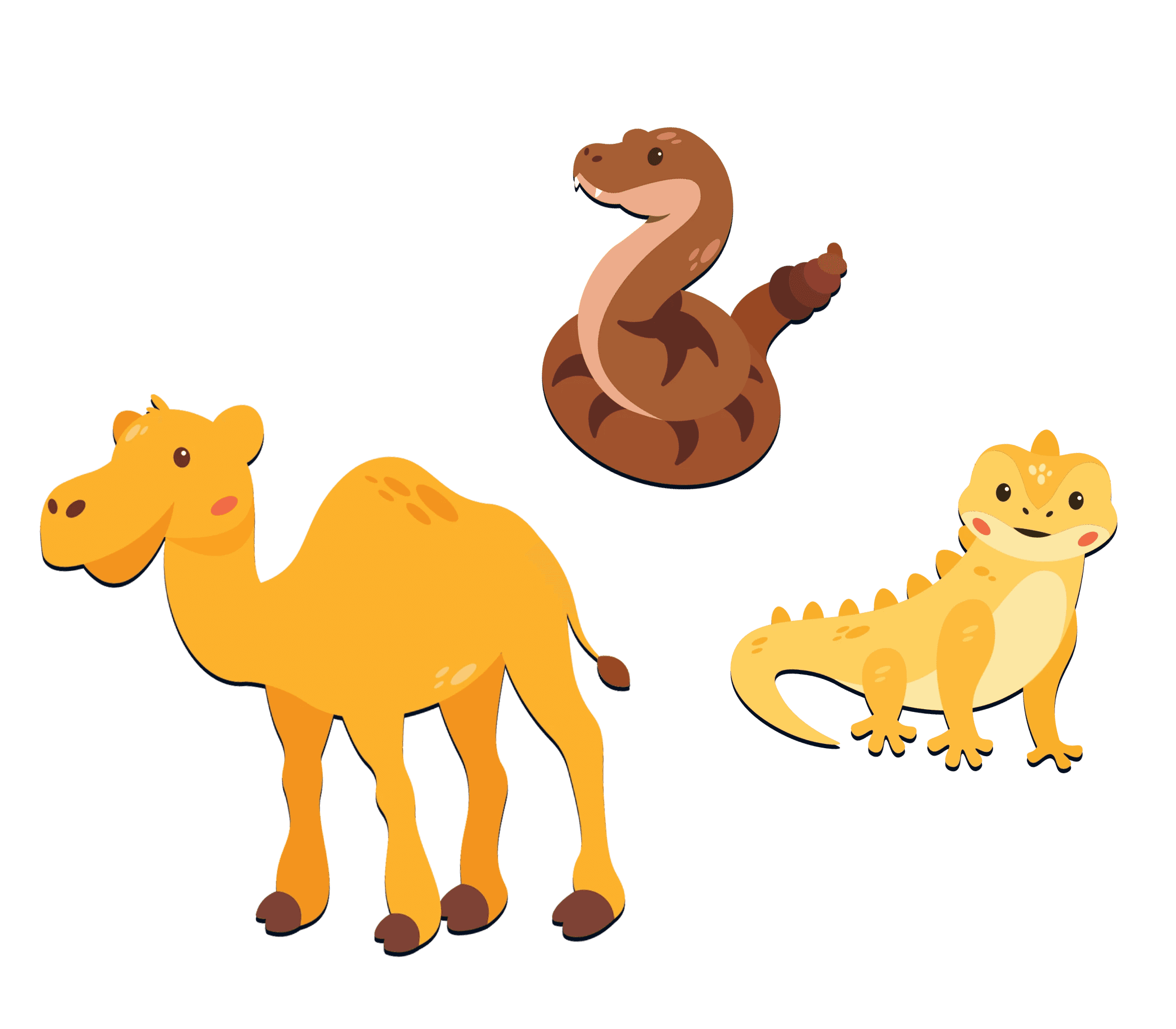
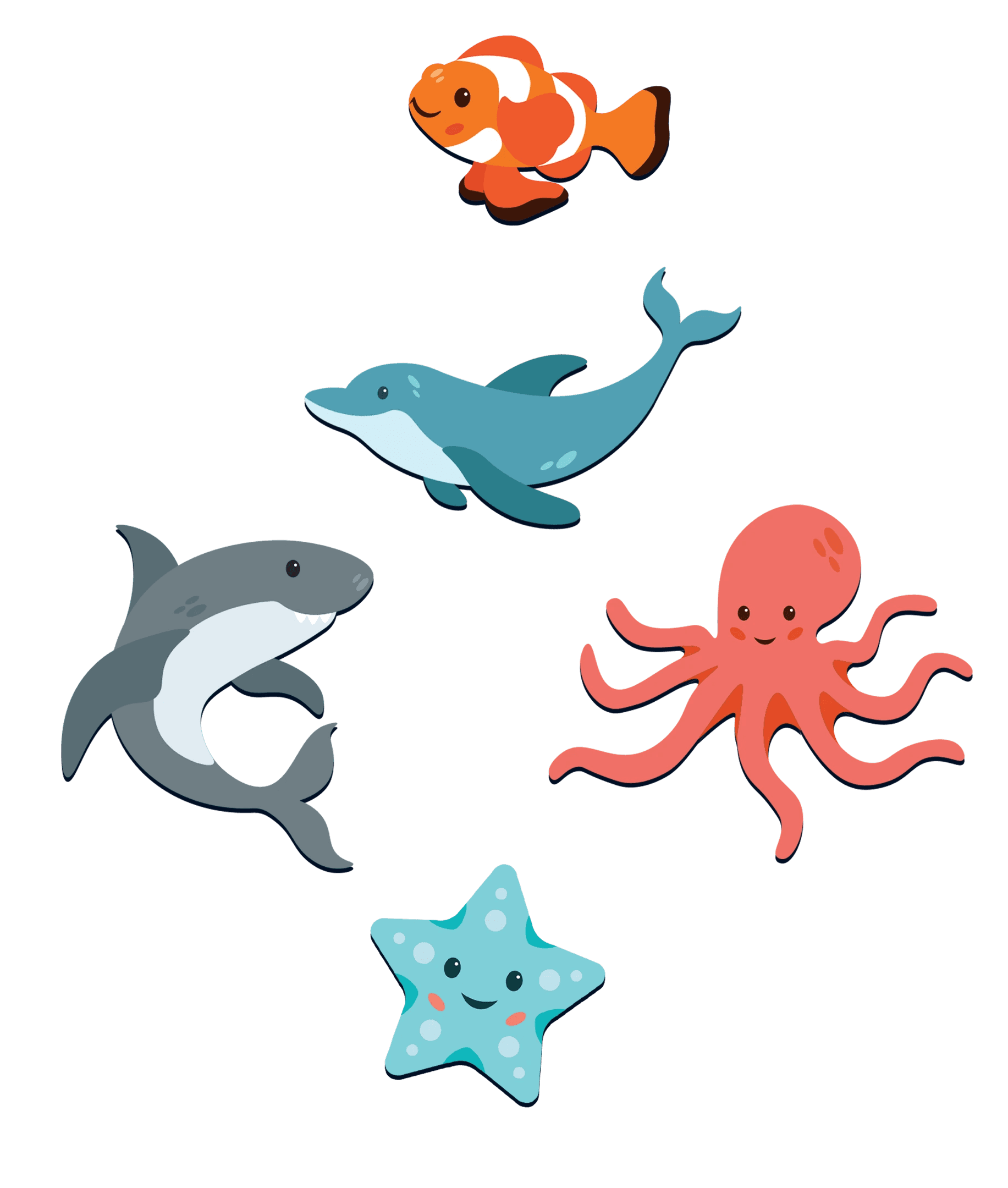
Where Do I Live? is an educational board game designed to introduce children to different animals and their natural habitats. The game features four distinct terrains—forest, ocean, polar, and desert—each populated with its respective animals. Beyond learning, the game encourages children to create their own stories while playing, fostering imagination, curiosity, and an engaging understanding of the natural world.
Where Do I Live? is an educational board game designed to introduce children to different animals and their natural habitats. The game features four distinct terrains—forest, ocean, polar, and desert—each populated with its respective animals. Beyond learning, the game encourages children to create their own stories while playing, fostering imagination, curiosity, and an engaging understanding of the natural world.
Where Do I Live? is an educational board game designed to introduce children to different animals and their natural habitats. The game features four distinct terrains—forest, ocean, polar, and desert—each populated with its respective animals. Beyond learning, the game encourages children to create their own stories while playing, fostering imagination, curiosity, and an engaging understanding of the natural world.

The Terrains
The Terrains
The Terrains
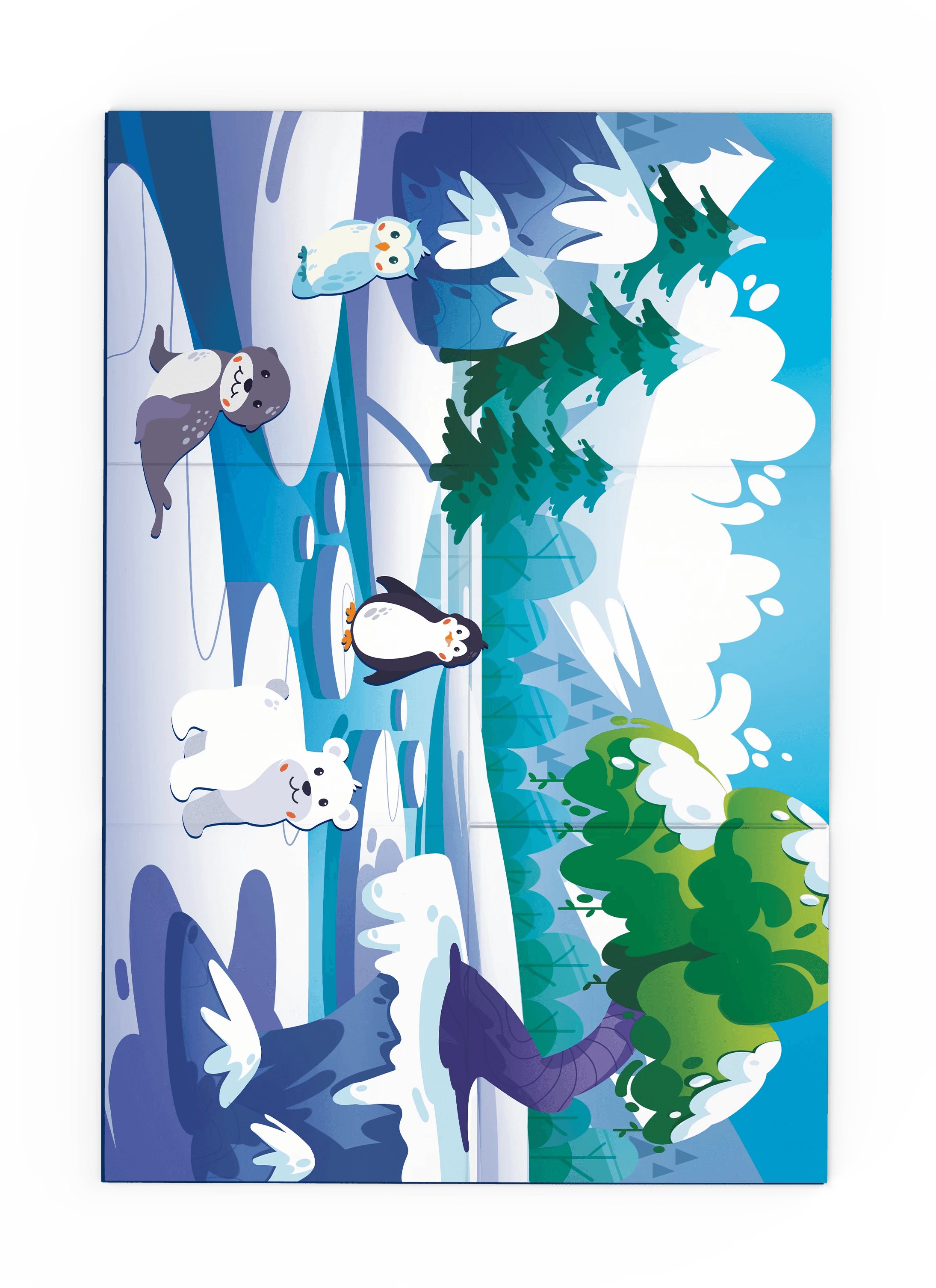
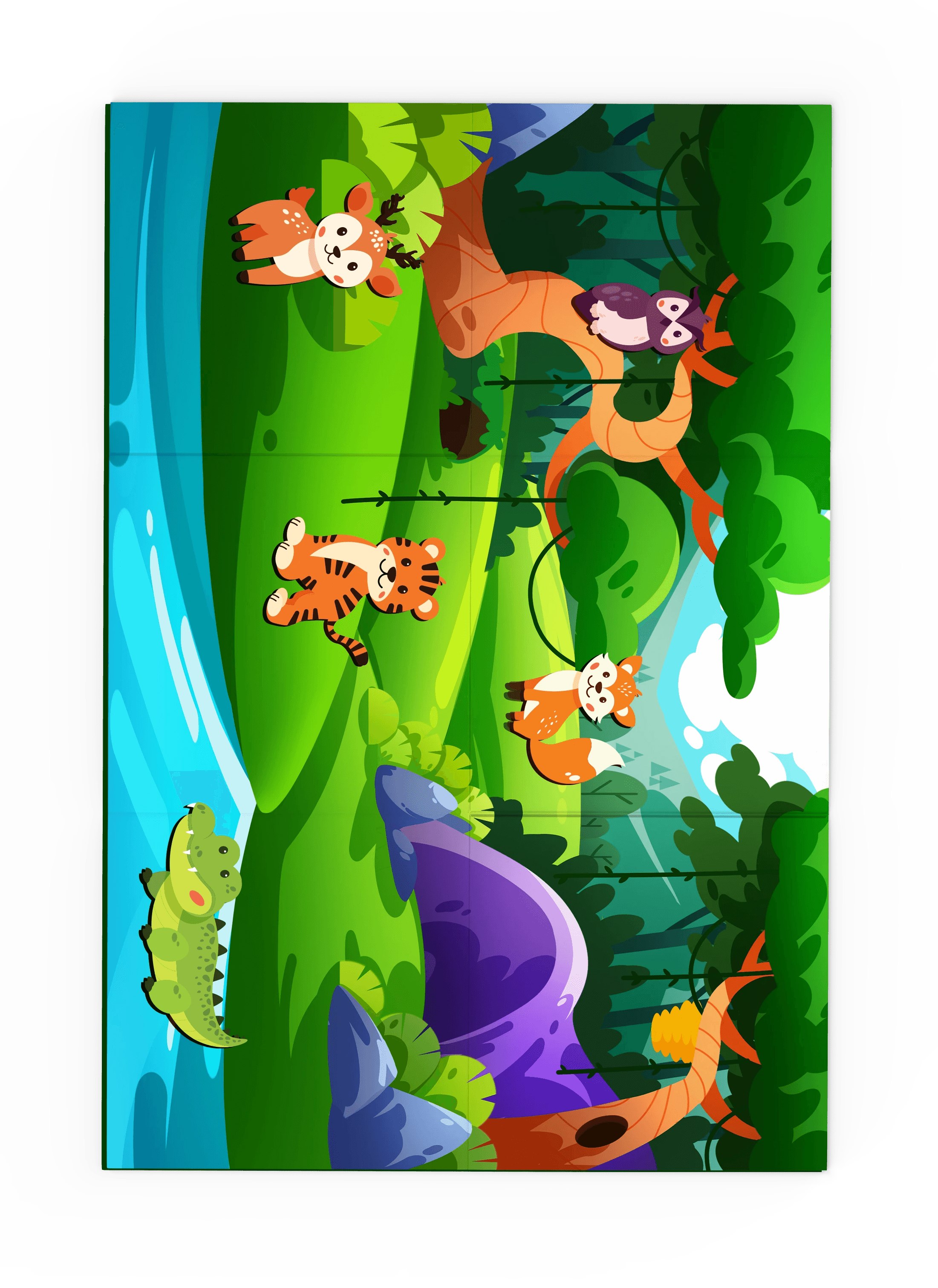
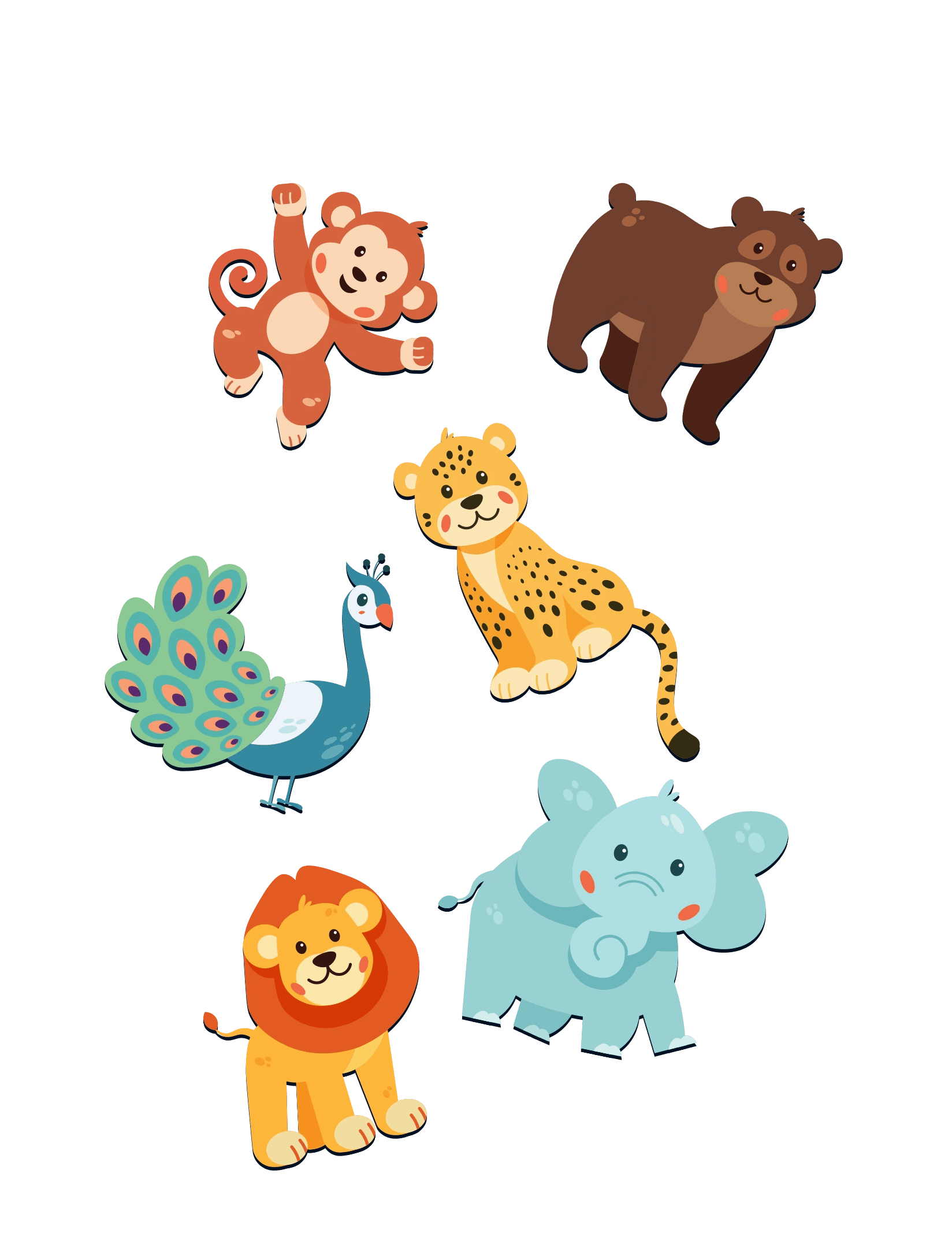
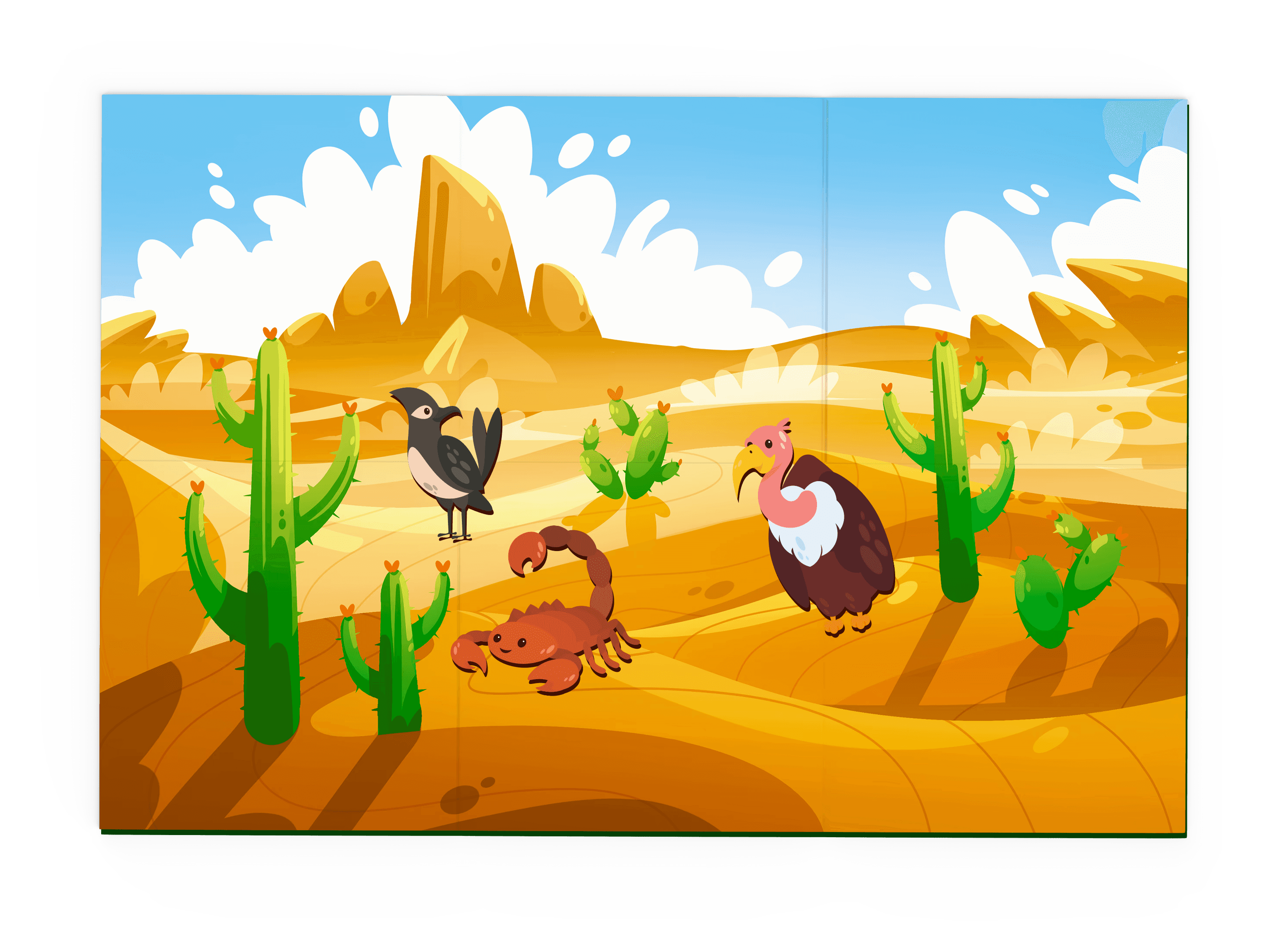
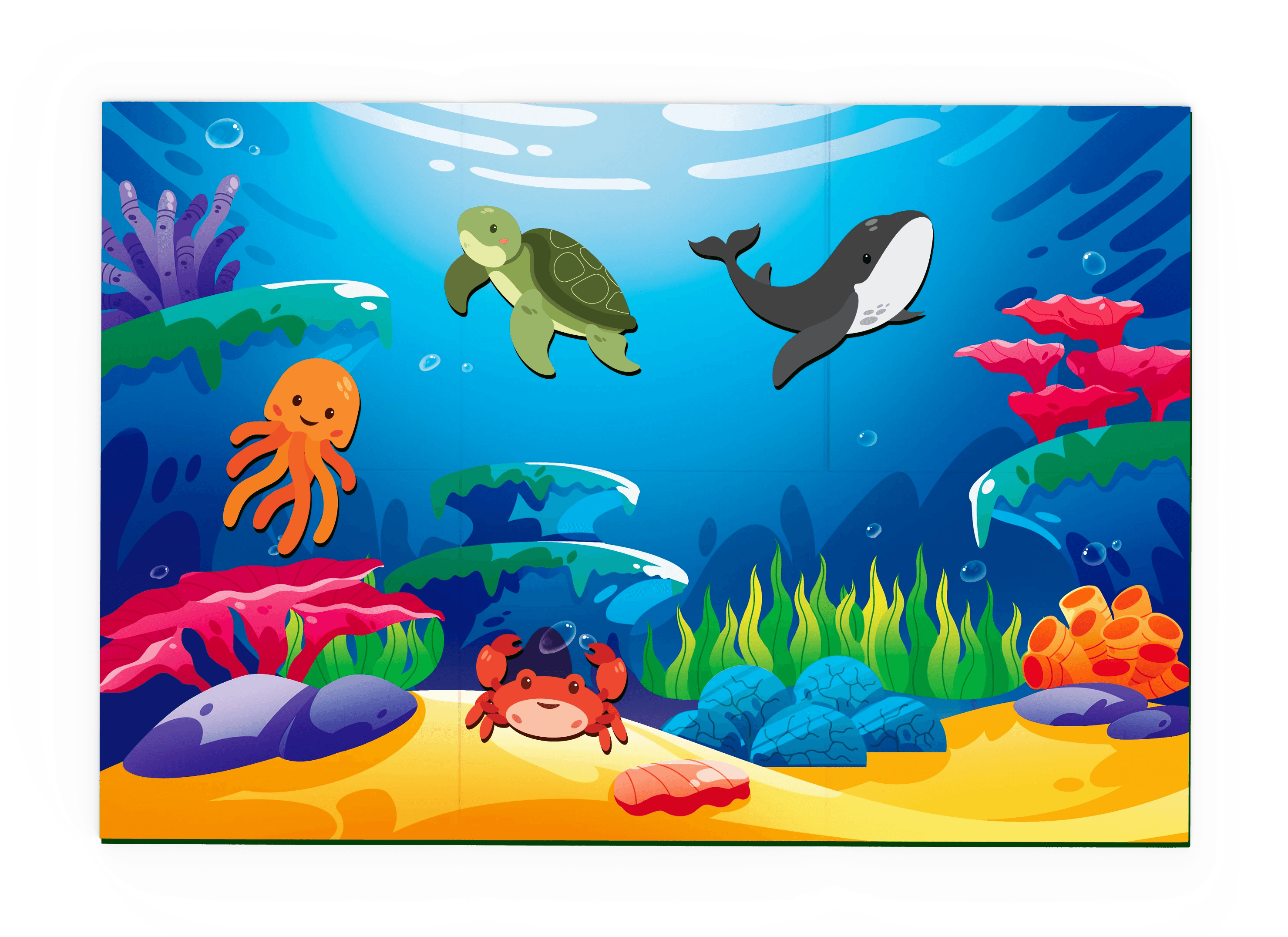
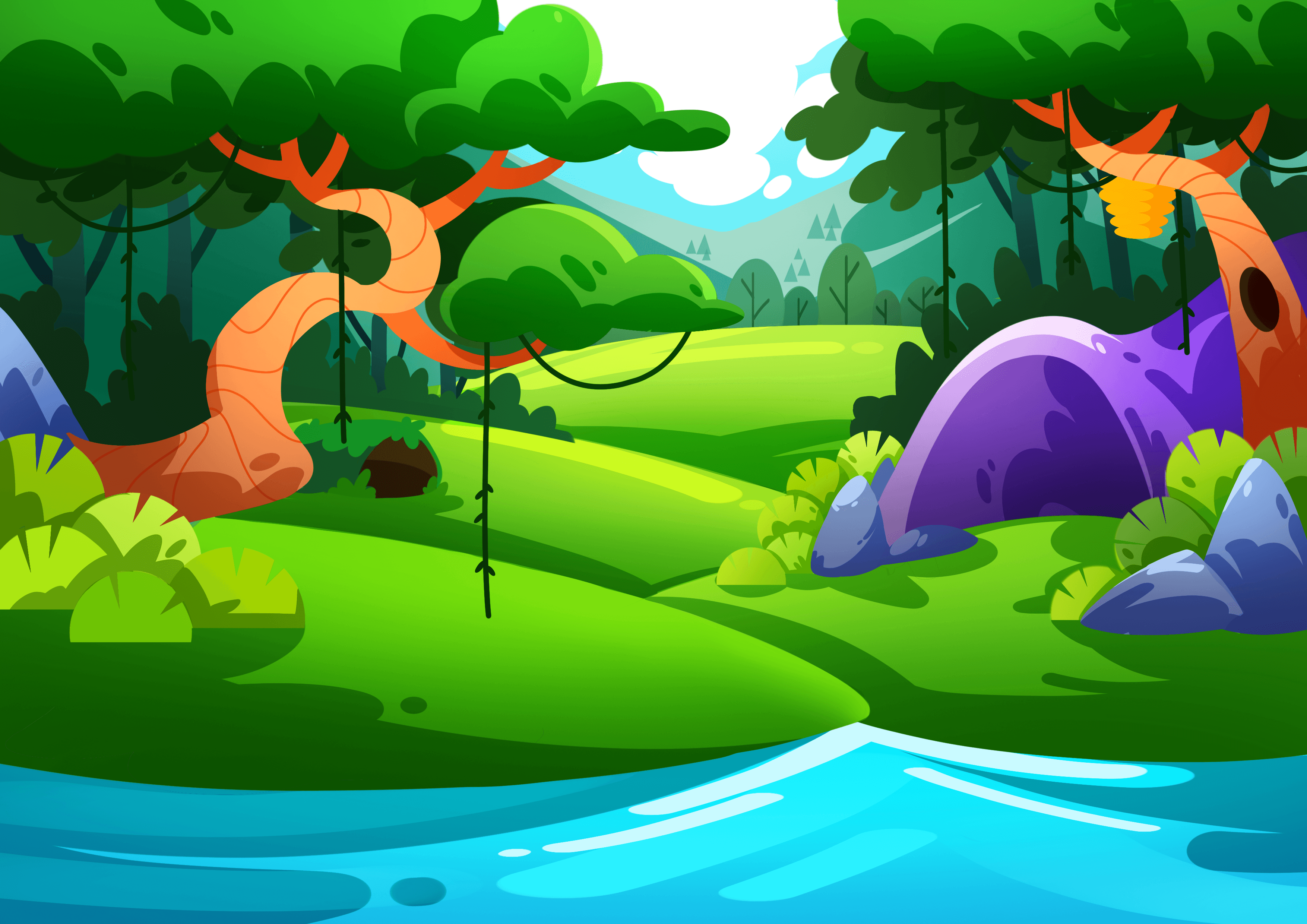
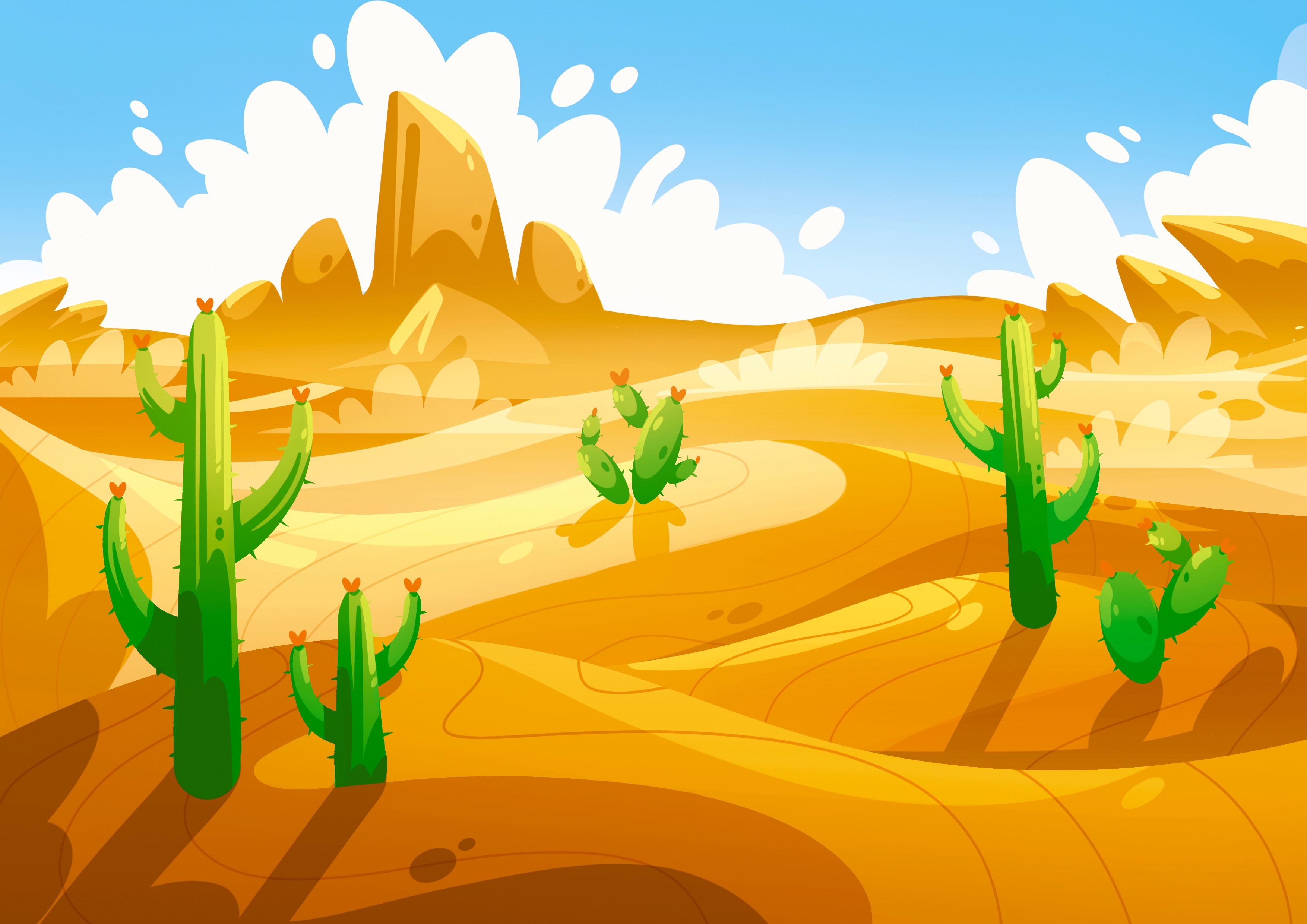
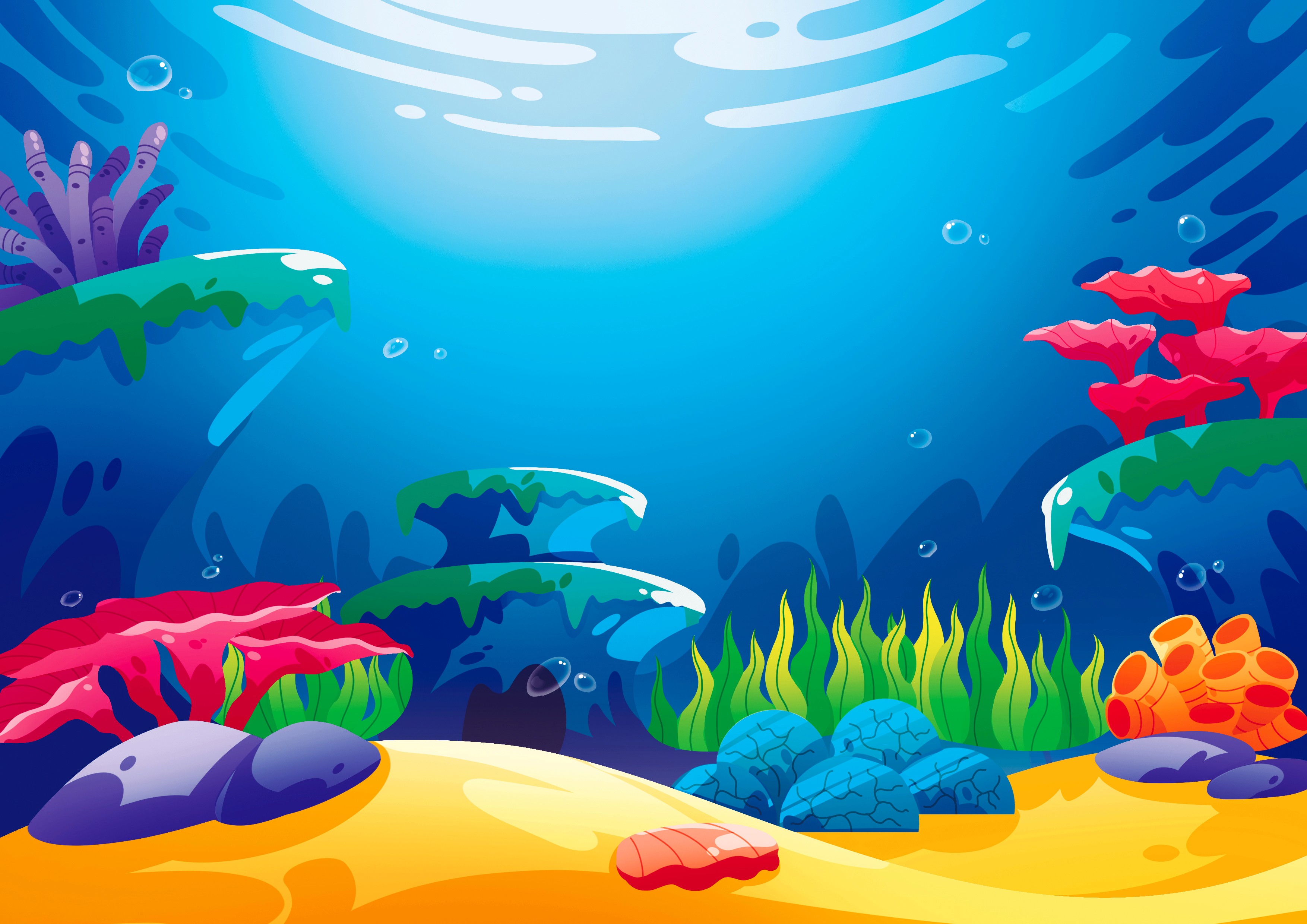
The terrains were consciously illustrated to give each animal its own designated space while visually reinforcing the relationship between the animal and its habitat. The illustrations are stylised to reflect how children perceive their environment—playful and cartoonish—while the use of fresh, vibrant colours was chosen to appeal to the target audience and enhance engagement.
The terrains were consciously illustrated to give each animal its own designated space while visually reinforcing the relationship between the animal and its habitat. The illustrations are stylised to reflect how children perceive their environment—playful and cartoonish—while the use of fresh, vibrant colours was chosen to appeal to the target audience and enhance engagement.
The terrains were consciously illustrated to give each animal its own designated space while visually reinforcing the relationship between the animal and its habitat. The illustrations are stylised to reflect how children perceive their environment—playful and cartoonish—while the use of fresh, vibrant colours was chosen to appeal to the target audience and enhance engagement.

Play card Design
Play card Design
Play card Design
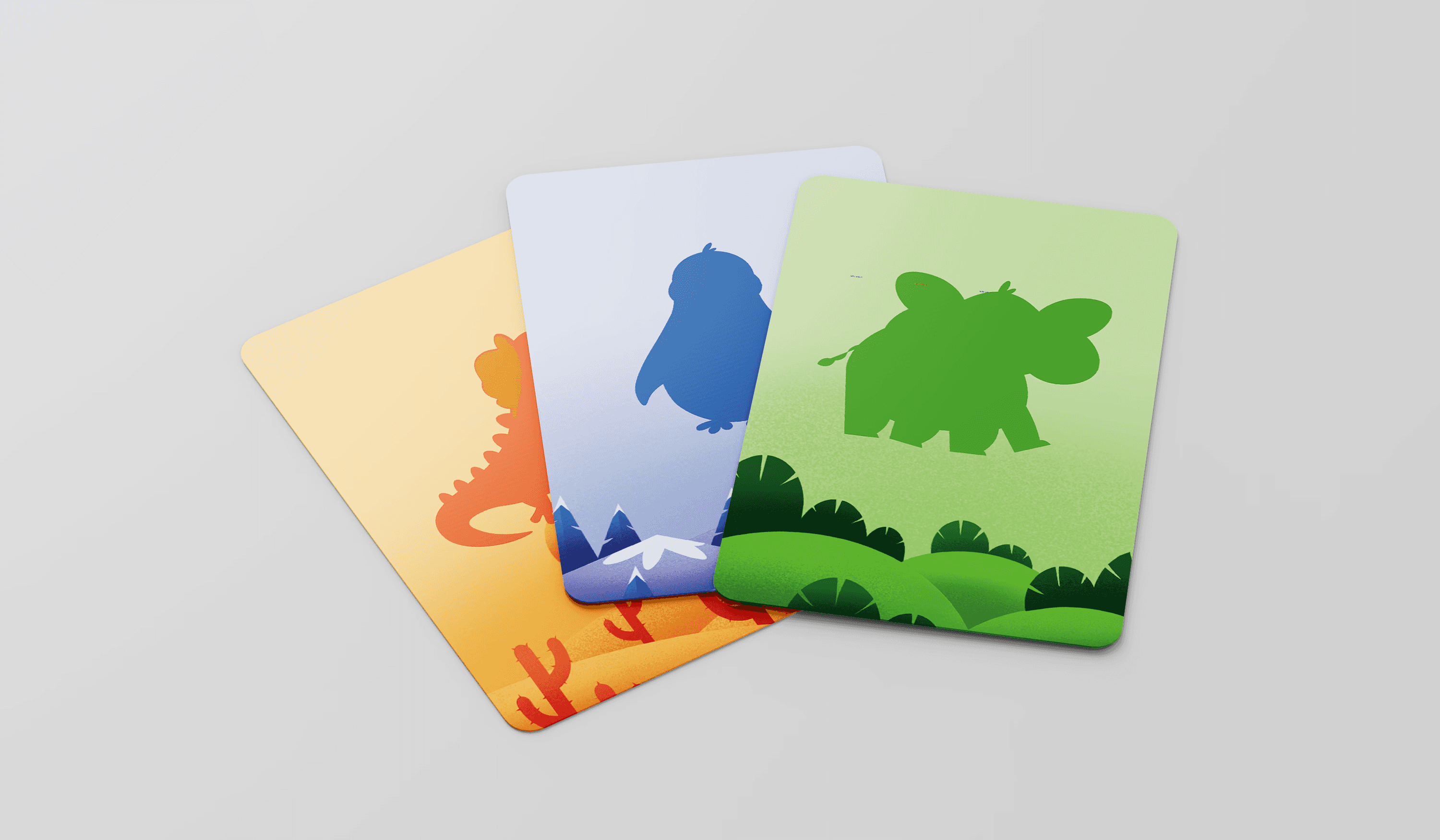
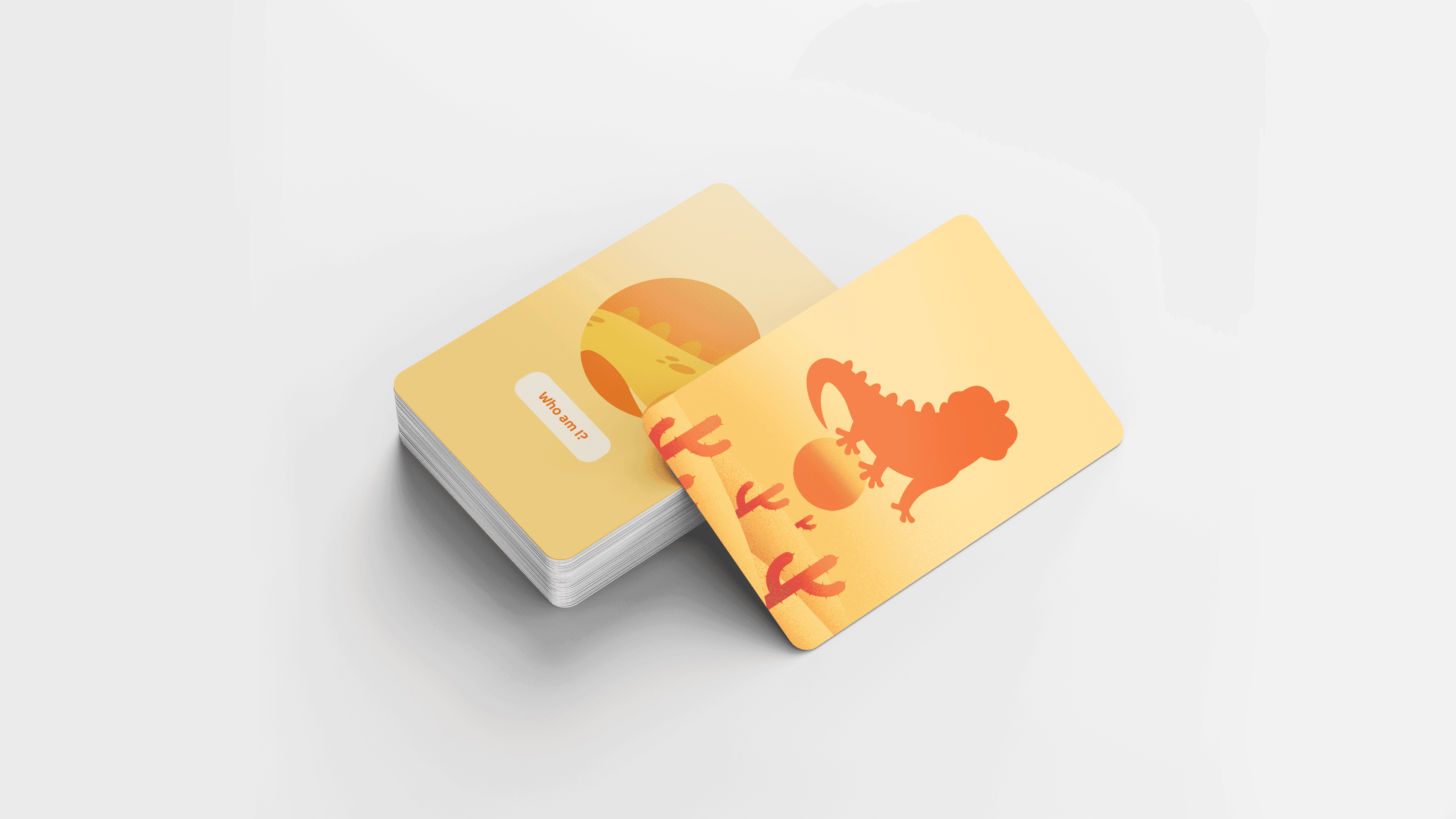
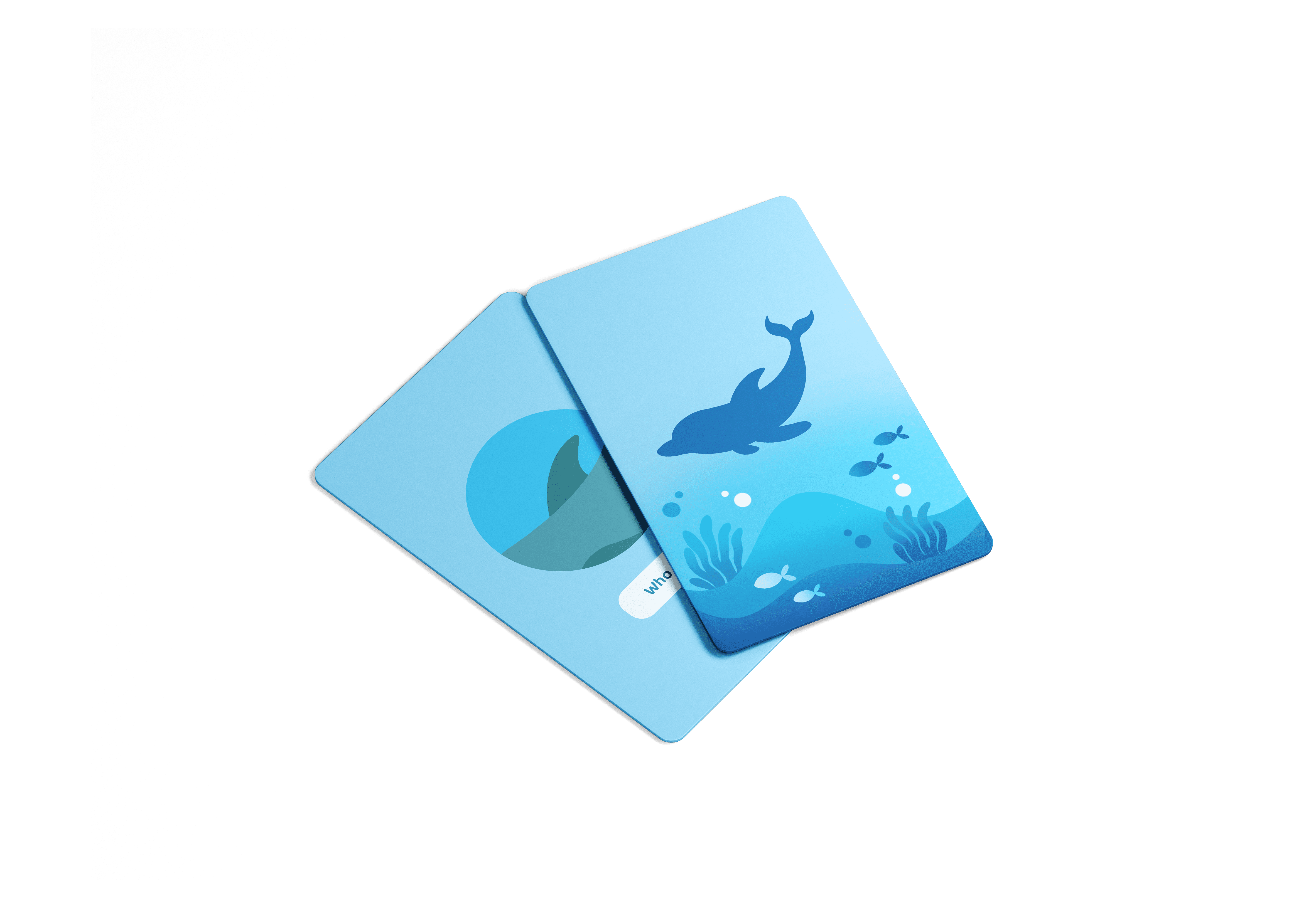
The project also involved designing play cards that provide visual hints through animal silhouettes, prompting children to guess the animal. This approach helps children learn to identify animals by understanding their distinct features and shapes, encouraging observation and cognitive development through play.
The project also involved designing play cards that provide visual hints through animal silhouettes, prompting children to guess the animal. This approach helps children learn to identify animals by understanding their distinct features and shapes, encouraging observation and cognitive development through play.
The project also involved designing play cards that provide visual hints through animal silhouettes, prompting children to guess the animal. This approach helps children learn to identify animals by understanding their distinct features and shapes, encouraging observation and cognitive development through play.